
Overpaying on Property Taxes? Check Before the Deadline
Homeowner Guide · October 2026
Overpaying on Property Taxes? Check Before the Deadline.
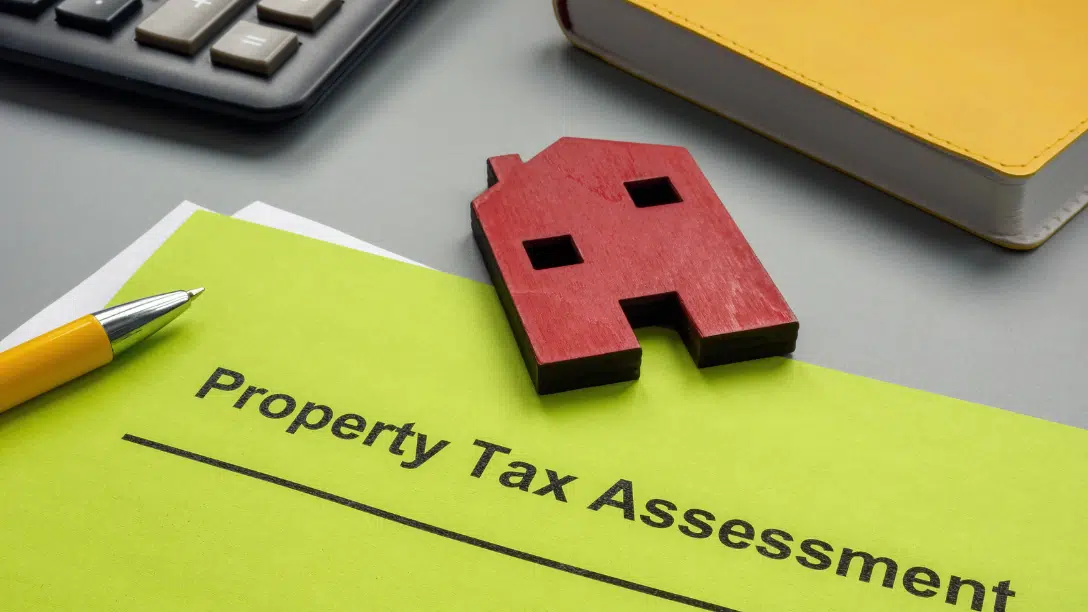
If you bought your home near the top of the market, there is a chance you are paying more in property taxes than you actually owe. California gives homeowners a way to fix that, and for several of the counties we serve, the window to act closes in November. Property taxes are one of the biggest ongoing costs of owning a home, so even a modest reduction can add up to real money. Here is how it works in plain English.
First, how your assessment works
In California, Proposition 13 sets your base assessed value when you buy, usually your purchase price, and limits how much it can rise each year. Your property tax is calculated from that assessed value, not from whatever the home might sell for today. In a rising market, that rule protects you, because your taxable value climbs slowly even as prices jump. But when prices fall, the same rule can leave your assessed value stuck above the home’s real worth. That is the gap Proposition 8 was designed to address.
What a decline-in-value review actually is
Under Proposition 8, if your home’s current market value has dropped below that assessed value, you can ask the county to temporarily lower the assessment. A lower assessed value can mean a lower tax bill for that year. It is important to understand that the reduction is temporary. If values recover later, the assessment can go back up, though never higher than your original Prop 13 base value plus the allowed annual adjustment. For now, if your home is worth less than the county thinks, a review can put money back in your pocket.
A quick example
Say you bought in 2024 for $850,000, and that became your assessed value. Prices in your neighborhood have since softened, and comparable homes are now selling closer to $780,000. Your tax bill, however, is still based on the higher figure. A successful decline-in-value review could lower your assessed value toward that current market number for the year, reducing what you owe. The exact savings depend on your local tax rate and the size of the gap, but the math is worth checking whenever the market has moved against you.
Who should look into this
This is most worth checking if you bought recently at a high price, especially in an area where prices have softened since. If comparable homes near you are now selling for less than what you paid, your assessed value may be out of line with today’s market. Homeowners who purchased a year or two ago, at or near a market peak, are the most common candidates. It costs nothing to look into, and the potential savings can be real.
Two ways to ask
There are usually two paths. The informal route is a decline-in-value request filed directly with your county assessor, which is generally free and is the simplest first step. The formal route is an assessment appeal filed with the county’s assessment appeals board, which is the more official process and has firmer deadlines. Many homeowners start informally and only escalate to a formal appeal if the assessor does not adjust the value or if the deadline is close. Either way, the key is not to miss your county’s cutoff.
2026 deadlines in the counties we serve
Deadlines are set by each county and can differ, so treat these as a starting point and confirm with your county assessor before you file:
- Los Angeles County: formal assessment appeals accepted through November 30, 2026 (postmark counts).
- Orange County: formal assessment appeals accepted through November 30, 2026 (by 5:00 p.m.).
- San Bernardino County: formal assessment appeals accepted through November 30, 2026.
- Riverside County: decline-in-value request due November 1, 2026; formal appeal window closes November 30, 2026.
How to build your case
The strongest evidence is recent sales of comparable homes near yours, ideally sold close to January 1 of the tax year. Gather a few solid comparables that show a lower value than your current assessment, and keep it simple and factual. Focus on homes similar to yours in size, age, condition, and location, and avoid distressed sales if you can, since assessors may weigh those differently. We are happy to help you pull comparable sales for your neighborhood so you can see whether a review is worth pursuing before you file.
What happens after you file
With an informal request, the assessor reviews your evidence and either adjusts your value or explains why they did not. With a formal appeal, you may be scheduled for a hearing before the appeals board, where you present your comparables and the county presents theirs. Keep copies of everything you submit, and continue paying your property tax bill on time while the review is pending, since filing does not pause your obligation. If you receive a reduction, it applies to that tax year, and the assessor will reassess again the following year.
Common questions
What is a Prop 8 decline-in-value review?
Under California Proposition 8, if your home’s current market value has fallen below its assessed value, you can ask your county assessor to temporarily lower the assessment. A lower assessed value can mean a lower property tax bill for that year.
What are the 2026 decline-in-value deadlines for Southern California counties?
For the 2026 cycle, Los Angeles, Orange, and San Bernardino counties accept formal assessment appeals through November 30, 2026, and Riverside County’s decline-in-value request is due November 1, 2026. Deadlines are set by each county and can change, so confirm directly with your county assessor.
Does it cost anything to request a decline-in-value review?
Informal decline-in-value reviews filed directly with the assessor are generally free. Formal assessment appeals filed with the county appeals board may carry a small processing fee in some counties. Check your county’s site for current details.
Will a lower assessment stay in place permanently?
No. A Prop 8 reduction is temporary. The assessor reviews the value each year and can raise it back up as the market recovers, though it cannot exceed your original Prop 13 base value plus the allowed annual adjustment.
Not sure if your assessment is too high? Let’s take a look together.
Or call us at 626-262-4321
NestMade Mortgage · NMLS #1665660 | DRE #1527206 | Licensed in CA & CO | Equal Housing Lender
This is general information, not tax or legal advice. Property tax assessment and appeal deadlines are set by each county and are subject to change; confirm current dates and requirements with your county assessor or a qualified tax professional. nestmade.com | 626-262-4321


