Your first home, explained before you commit to anything.
Most first-time buyers in California think they need twenty percent down and a perfect credit score. Usually neither is true. Let’s find out what you can actually do.
The programs first-time buyers actually use.
You do not need to know which one is right. That is our job. Here is what is on the table.
FHA loans
Government backed, and generally more forgiving on credit and down payment than conventional. A common starting point when you are still building your credit profile.
Low down payment conventional
Some conventional programs allow a lower down payment than most buyers expect for those who qualify, and can cost less over time than FHA depending on your credit.
VA loans
If you are an eligible veteran or service member, VA financing offers benefits that are hard to match, including no down payment options for those who qualify.
Down payment assistance
California runs statewide programs through CalHFA, and many cities and counties have their own. Eligibility and funding change, so we check what is currently available.
Assistance programs →USDA loans
For qualified buyers in eligible areas. Worth checking, because the eligible map covers more of Southern California than people assume.
TBD pre-approval
A deeper pre-approval where your file is underwritten before you find a home. It makes your offer much stronger in a competitive situation.
Four steps, and you always know where you stand.
Talk it through
A conversation about your income, savings, and timeline. No application, no credit pull.
Get pre-approved
We review your credit, income, and assets, then shop lenders for the programs you qualify for.
Shop with confidence
You look at homes with a real budget and a pre-approval letter sellers take seriously.
Close and move in
We manage the file through underwriting to closing and keep you updated the whole way.
What first-time buyers ask us most.
How much of a down payment does a first-time homebuyer need in California?
Less than most first-time buyers assume. Twenty percent is a common belief, but it is not required for most loan types. Some conventional programs allow a low down payment for qualified buyers, FHA loans have their own lower requirement, and VA loans may allow no down payment for eligible veterans and service members. California also offers down payment assistance programs for buyers who qualify. The right number depends on the loan program, the property, and your credit and income profile, so the useful answer comes from reviewing your specific situation rather than a general rule.
What credit score do I need to buy a first home?
There is no single cutoff, because different loan programs have different minimums and lenders set their own overlays on top of program guidelines. FHA loans are generally more flexible on credit than conventional loans. A higher score typically improves the terms you are offered, but a lower score does not automatically disqualify you. If your score is close to a threshold, small changes can matter, which is why it is worth having someone review your credit before you apply rather than after.
What is down payment assistance and do I qualify?
Down payment assistance is money offered by state, county, or city programs to help qualified buyers cover the down payment or closing costs, often structured as a second loan or a grant. California has statewide programs through CalHFA, and many cities and counties run their own. Eligibility usually depends on income limits, the purchase price, the property location, and whether you are a first-time buyer. Programs change and funding can run out, so current eligibility should always be confirmed before you rely on it.
Should I get pre-approved before I start looking at homes?
Yes. A pre-approval tells you the price range you can actually work in, which prevents you from falling in love with a home outside your budget. It also makes your offer credible, because most sellers and listing agents in California will not seriously consider an offer without one. Pre-approval involves a credit check, but an initial conversation about your options does not affect your credit at all.
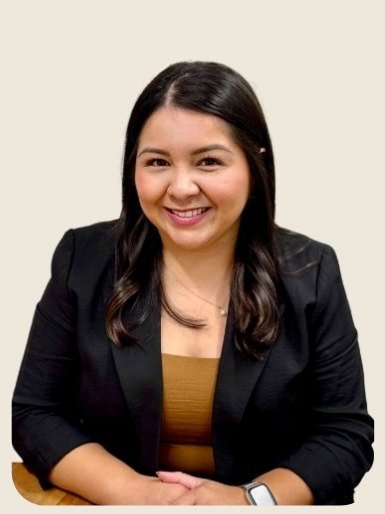
Erika Araujo
Erika spends most of her time with first-time buyers, and she is the person who will go through the numbers with you as many times as you need. In English or Spanish, at whatever pace works.
Schedule with Erika

Find out where you stand.
No pressure and no obligation. If the honest answer is that you should wait six months, we will tell you that and show you what to work on.
A plain-English walk through the programs, the real costs, and what happens after pre-approval, for the Inland Empire and San Gabriel Valley.
Read the first-time buyer guide